How-To
How to Check Chainsaw Bar Rail Wear — When to Replace
Users ask: bar has grooves, chain leans to one side, cuts curve instead of straight
Published
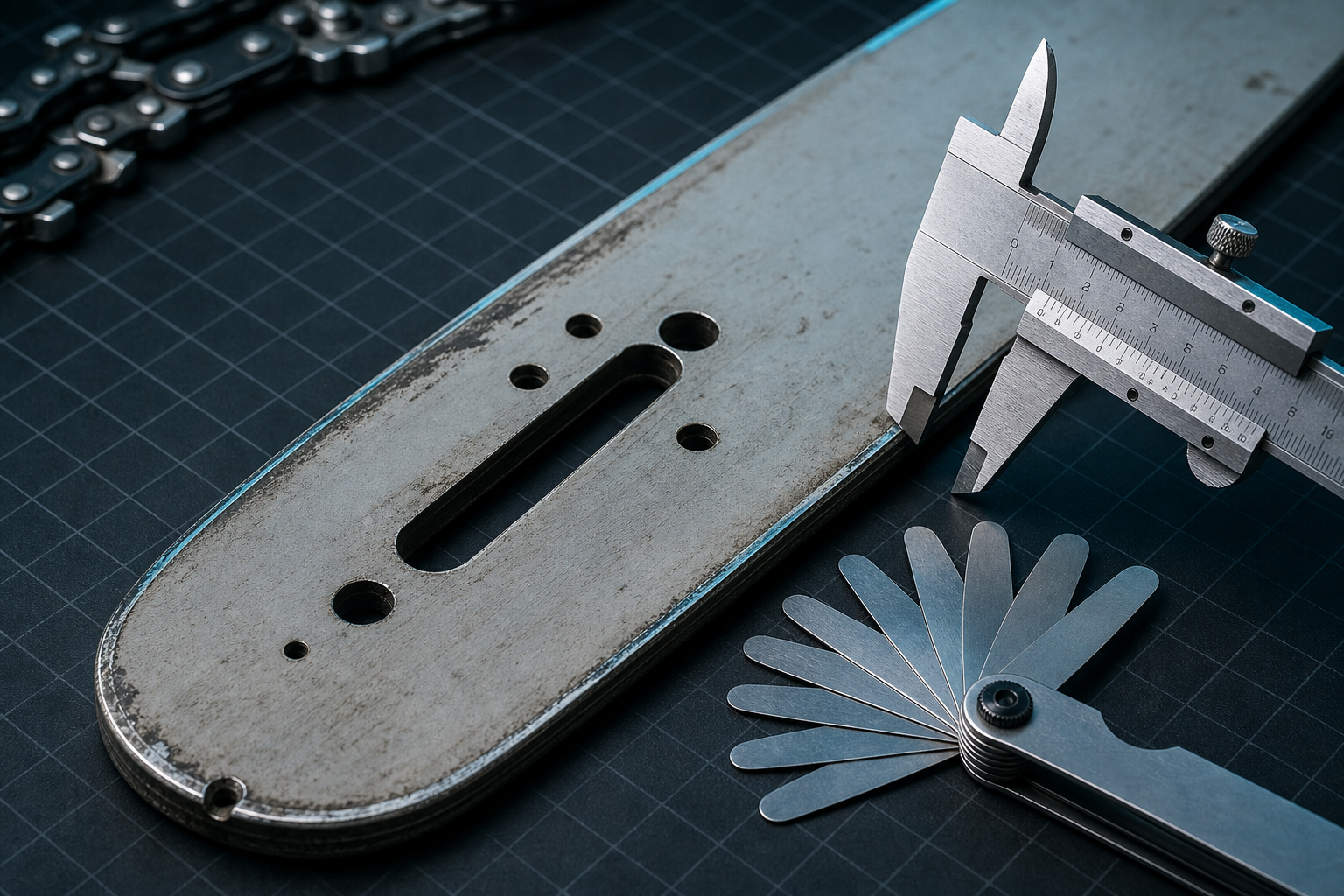
A chainsaw that suddenly starts cutting in an arc instead of a straight line often gets blamed on the chain, but the guide bar is just as often the real problem. This question comes up often in owner forums: the bar has visible grooves, the chain seems to lean to one side, and the saw pulls sideways in the cut. In many cases, that points to bar rail wear. The good news is that guide bar wear is easy to check with a few simple inspections, and catching it early can save chains, sprockets, and a lot of frustration. Here’s how to evaluate chainsaw bar rail wear and decide when replacement is the right move.
Why Bar Rail Wear Matters
The guide bar does more than hold the chain in place. Its rails support the drive links and keep the cutters tracking in a straight line through the wood. When those rails wear unevenly, widen out, or lose their square edges, the chain can rock side to side instead of running true.
That creates a few common symptoms:
- The saw cuts crooked even with a recently sharpened chain
- The chain leans left or right on the bar
- The cut requires steering pressure to stay straight
- One side of the bar rails looks lower or more rounded than the other
- Chain and bar wear accelerate together
Some rail wear is normal over time, especially on homeowner saws that may run with a loose chain, inconsistent bar oiling, or dirt contamination. But once the rail shape changes enough, the bar stops guiding the chain accurately.
Before replacing parts at random, it helps to understand that a curved cut can come from more than one issue. Uneven cutter length, uneven top plate angles, damaged drive links, a worn rim sprocket, or poor chain tension can all contribute. Still, if the chain physically tilts in the groove, the bar deserves a close look.
How to Inspect the Bar Rails
Start with the saw off, cool, and disconnected from power or spark plug boot if appropriate. Remove the side cover, chain, and bar so you can inspect everything clearly. Clean the bar thoroughly first. Packed sawdust and oil can hide wear.
Here’s what to check.
1. Look at the rail tops
The top edges of the rails should be fairly flat and square. If they are mushroomed over, rounded off, or sharp on one side and low on the other, the chain will not sit correctly.
A healthy bar rail typically has:
- Two defined rail edges
- Even rail height from one side to the other
- A groove that holds the drive links upright
A worn bar often shows:
- One rail lower than the other
- Edges rolled outward
- Polished, heavily worn areas near the middle or nose
- Blue discoloration from heat
2. Check whether the chain rocks in the groove
Reinstall the chain on the cleaned bar or hold the chain’s drive links in the groove by hand. If the chain visibly tips side to side with too much movement, the groove may be worn too wide.
A little movement is normal. Excessive rocking is not.
This is one of the biggest clues when users say, “the chain leans to one side.” If the drive links no longer fit the bar groove correctly, the chain can’t stay vertical in the cut.
3. Inspect groove depth
Bar groove depth matters because the drive links must be properly supported. If the groove becomes too shallow from wear, the bottoms of the drive links may start contacting the groove bottom instead of riding properly between the rails.
A quick field check is to compare the drive link tang to the visible rail height. If the drive link seems to bottom out or protrude improperly relative to the groove, the bar may be worn out. A dedicated groove gauge gives a more exact reading.
4. Examine the bar nose
On sprocket-nose bars, check for:
- Nose sprocket binding
- Side play
- Damaged or chipped rails near the tip
- Heat discoloration
The nose area sees high friction and can wear faster if lubrication is poor. A damaged nose can also make the saw pull in the cut.
5. Compare both sides of the bar
Flip the bar over and inspect both rails along the full length. Bars often wear unevenly if they are never flipped during service. One side may show much more rounding or loss of height.
If one rail is clearly lower, the chain will naturally favor that side and produce a curved cut.
Signs the Bar Is Causing Crooked Cuts
Crooked cutting is one of the most common complaints tied to rail wear, but it helps to separate bar problems from chain problems.
A bar is the likely cause when:
- The chain physically tilts on the bar
- Rail height is visibly uneven
- The groove is widened or the rail edges are rolled
- A freshly sharpened or even new chain still cuts in a curve
- Multiple chains have shown the same leaning or wandering behavior on the same bar
By contrast, the chain is the more likely cause when:
- One side’s cutters are longer than the other
- Filing angles differ from left to right
- One side is damaged from hitting metal or rock
- Depth gauges are uneven
In the shop, a fast way to narrow it down is to install a known-good chain on the suspect bar, or install the suspect chain on a known-good bar. If the problem stays with the bar, you have your answer.
Also inspect the drive sprocket. A badly worn sprocket can cause rough chain travel and speed up bar and chain wear. On saws with enough hours, it’s smart to think of the bar, chain, and sprocket as a wear system rather than isolated parts.
When the Bar Can Be Dressed — and When It Should Be Replaced
Not every worn bar needs immediate replacement. Minor rail deformation can often be corrected, but there is a limit.
A bar may be salvageable if:
- The rails are only lightly burred or mushroomed
- Rail height is still mostly even
- The groove is not excessively widened
- There are no cracks, severe nose damage, or major heat damage
In those cases, you can dress the rails with a flat file or bar dresser. The goal is to remove burrs and restore flat, square rail tops. File lightly and evenly. Do not remove more material than necessary.
After dressing:
- Clean the groove
- Clear the oil holes
- Deburr the bar edges
- Flip the bar in regular service to even future wear
Replace the bar if:
- One rail is significantly lower than the other
- The chain leans noticeably in the groove
- The groove is worn too wide for the chain gauge
- The groove depth is no longer adequate
- The nose sprocket is loose, seized, or damaged
- The bar body is cracked, bent, or heat-damaged
- The saw still cuts crooked after chain issues have been ruled out
If you’re seeing both a worn bar and a worn chain, replace them together. Installing a new chain on a badly worn bar often leads to poor cutting and rapid chain wear. Likewise, pairing a new bar with a severely worn drive sprocket is asking the new parts to wear in badly.
For many homeowners, a bar-and-chain combo is the most practical reset when the bar is questionable and the chain has already seen several sharpenings. For higher-use saws, especially arborist setups, matching the correct gauge, pitch, and sprocket condition is essential to getting clean, straight performance back.
How to Prevent Rail Wear From Returning Too Quickly
Guide bars are wear items, but they last much longer with consistent maintenance.
Use these habits to extend bar life:
- Keep chain tension correct; a loose chain hammers the rails
- Maintain steady bar-and-chain oil flow
- Clean the bar groove and oil holes regularly
- Flip the bar each time you sharpen or replace the chain
- Dress burrs before they become major rail distortion
- Avoid running a dull chain, which increases heat and side load
- Replace worn sprockets on schedule
- Match chain gauge exactly to the bar groove
Cutting dirty wood, stumps, roots, or storm debris full of grit accelerates rail wear dramatically. That doesn’t mean the bar is poor quality; it means the operating conditions are abrasive.
If this question comes up often in owner forums, it’s because the symptoms are easy to misread. Owners will often sharpen the chain again and again when the real issue is that the bar can no longer hold the chain straight. Once rail wear reaches that point, replacement is not wasting money — it’s restoring the saw’s ability to cut safely and predictably.
Watch: Video Walkthrough
FAQ
Can a chainsaw bar with grooves still be used?
Yes, up to a point. Visible grooves are normal because the chain rides in the bar groove by design. What matters is whether the rails are still even, square, and correctly supporting the chain. If the chain rocks excessively, leans, or cuts crooked, the bar may be worn out.
Why does my chainsaw chain lean to one side?
The most common causes are uneven bar rail wear, an overly wide bar groove, or a damaged chain. If the chain leans on more than one chain setup using the same bar, the bar is the likely problem.
Will a new chain fix a chainsaw that cuts crooked?
Only if the old chain was the cause. If the guide bar rails are uneven or worn wide, a new chain usually will not solve the problem. In fact, it may wear prematurely on a bad bar. Check the bar, chain, and sprocket together before replacing parts.
Find the right part on Amazon
Check price, stock and fitment — ships direct from Amazon.
Parts


