How-To
Worn Chainsaw Sprocket — Signs and Replacement Guide
Forum posts: chain skips, sprocket has hooked teeth, unusual vibration at full throttle
Published
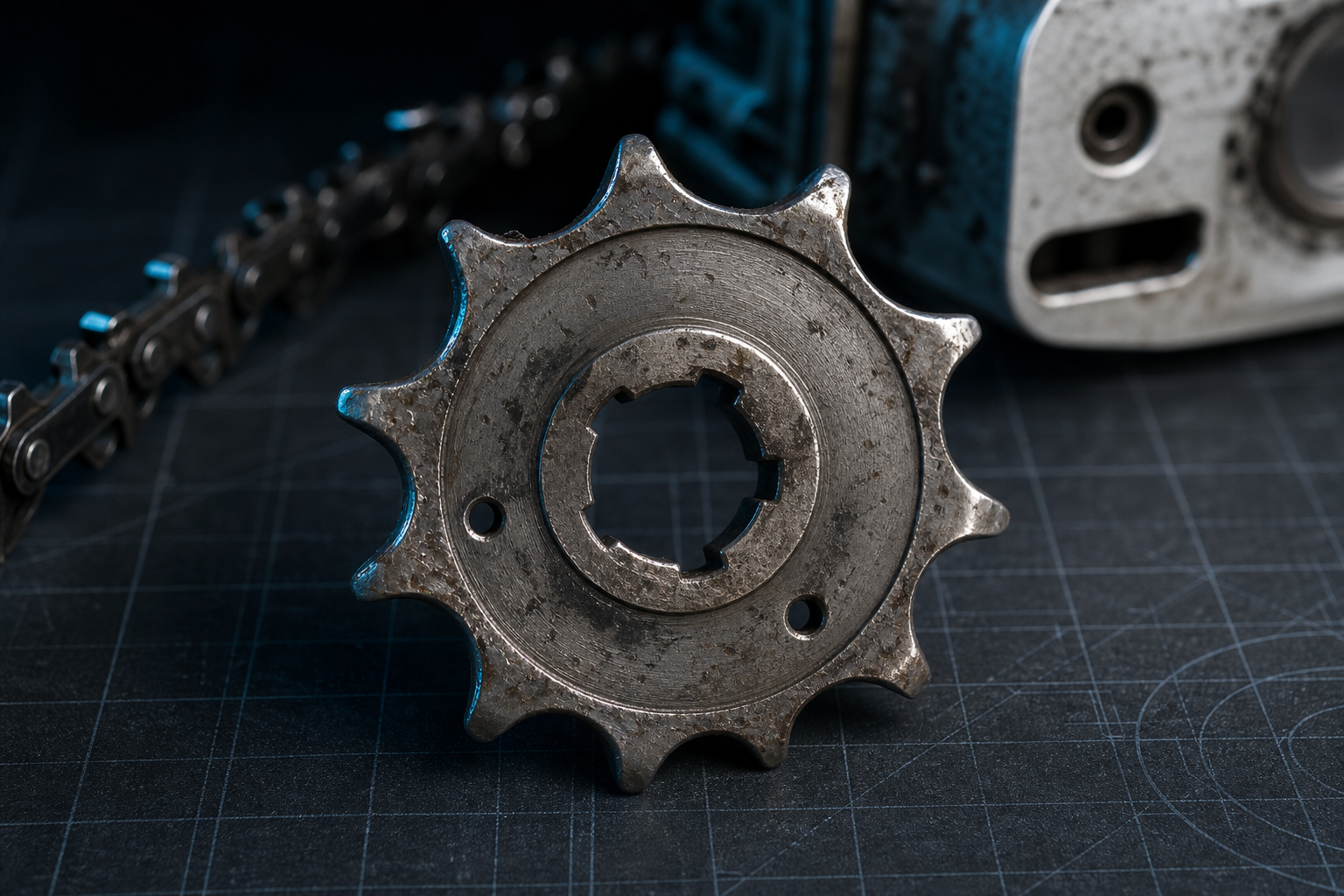
A worn chainsaw sprocket can cause a surprising number of cutting problems, even when the bar and chain still look usable. If your chain skips, chatters under load, or the saw develops a harsh vibration at full throttle, the drive sprocket deserves a close look. This question comes up often in owner forums because many owners replace chains regularly but forget that the sprocket is also a wear item. Once the sprocket teeth wear into a hooked shape or the rim develops grooves, the chain no longer runs smoothly. That leads to faster chain stretch, uneven cutting, and extra stress on the clutch, bar, and crankshaft bearings.
What a chainsaw sprocket does and why it wears out
The sprocket is the part that transfers engine power to the saw chain. On most modern saws, that means either a rim sprocket system or a spur sprocket integrated with the clutch drum. As the engine turns the clutch, the sprocket pulls the chain around the guide bar.
Because the chain drivers engage the sprocket thousands of times per minute, wear is unavoidable. Dirt, poor lubrication, chain tension mistakes, and running a badly worn chain all speed up the process. A sprocket also wears in relation to the chain pitch. If the pitch is correct but the teeth are worn, the chain won’t seat properly and starts riding up on the sprocket instead of nesting cleanly.
Typical causes of premature sprocket wear include:
- Running dull chains that require more throttle and pressure
- Letting the chain get too loose or too tight
- Poor bar-and-chain oiling
- Using a new chain on a badly worn sprocket
- Debris buildup behind the clutch cover
- Extended use without rotating maintenance across chain, bar, and sprocket
A good rule many technicians follow is to inspect the sprocket every time you replace the chain, and strongly consider replacing it after two chains, sometimes sooner in dusty or high-use conditions.
Signs your chainsaw sprocket is worn out
Forum complaints about chain skipping, hooked sprocket teeth, and unusual vibration at full throttle are classic warning signs. The key is knowing what normal wear looks like versus wear that calls for replacement.
Here are the most common symptoms:
- Hooked or pointed teeth: The sprocket teeth should have a smooth profile. If they look drawn out, hooked, or sharp, the chain is no longer engaging correctly.
- Visible grooves in the rim or spur: Deep wear marks where the chain drivers ride indicate the sprocket has worn into the chain pattern.
- Chain skips or surges: If the chain seems to jump or hesitate while cutting, the sprocket may be failing to carry the chain consistently.
- Excess vibration at speed: A worn sprocket can create a rhythmic vibration, especially noticeable at full throttle.
- Accelerated chain wear: If a fresh chain stretches quickly or develops uneven driver wear, the sprocket may be the cause.
- Noise from the clutch area: Clicking, rattling, or rough running sounds under the side cover can point to sprocket or drum wear.
There are also secondary clues. You may notice the saw cuts less smoothly even with a sharp chain. The chain might need frequent tension adjustment. In some cases, the bar rails begin wearing unevenly because the chain is being driven inconsistently from the rear.
A quick visual inspection helps. Remove the clutch cover, bar, and chain, then rotate the sprocket by hand. Look for pitting, grooves, chipped edges, or a polished track that is noticeably deeper than the surrounding metal. On a rim sprocket, check whether the pockets that accept the chain drivers are worn wide or uneven.
How to confirm the sprocket is the problem
Before ordering parts, make sure the sprocket is actually the source of the trouble. Chainsaw cutting issues can also come from a dull chain, incorrect chain pitch, a worn guide bar, or improper chain tension.
Work through these checks:
-
Verify chain pitch compatibility
Make sure the chain pitch matches the sprocket and guide bar. A mismatch can cause skipping and rough operation even with new parts. -
Inspect the chain drivers
Look for peening, abnormal wear, or damaged drive links. If the chain has been run on a worn sprocket for too long, the chain itself may now be compromised. -
Check bar groove and rail condition
A worn bar groove or burred rails can mimic sprocket problems. If the chain rocks excessively in the bar, address that too. -
Test chain tension
A loose chain can slap and skip. A too-tight chain can bind and overheat the clutch area. Set tension properly before drawing conclusions. -
Examine the clutch drum bearing
Excessive play in the drum bearing can create vibration and uneven chain engagement. Spin the drum and feel for roughness or wobble. -
Look for oiling issues
If the chain and bar are running dry, the sprocket may have overheated, but lubrication failure may be the root cause.
If you find hooked teeth, a deeply grooved rim, or obvious uneven wear, replacement is the correct move. Trying to squeeze more life from a worn sprocket usually costs more in chain and bar wear than it saves.
How to replace a worn chainsaw sprocket
Sprocket replacement varies by saw model, but the general process is straightforward if you work carefully. Always check your saw’s service information for exact clutch direction and removal procedure, since many chainsaw clutches use left-hand threads.
Basic replacement steps:
-
Disconnect the spark plug
Prevent accidental starting before doing any service. -
Remove the clutch cover, bar, and chain
Clean sawdust and oily debris from the area so you can inspect everything clearly. -
Inspect the clutch drum and sprocket type
Determine whether your saw uses a replaceable rim sprocket or a spur sprocket/clutch drum assembly. -
Lock the piston if required
Depending on the design, you may need a piston stop tool or starter-rope method to hold the crankshaft while removing the clutch. -
Remove the clutch or drum components
Follow the correct thread direction. Do not force it the wrong way. -
Replace worn parts
Install the new rim sprocket, drum, needle bearing, or related washers as needed. If the bearing looks dry or worn, replace it or lubricate it according to manufacturer recommendations. -
Reassemble with the correct chain pitch parts
Confirm the sprocket pitch matches the chain and bar setup. -
Reinstall the bar and chain
Set chain tension properly, then rotate the chain by hand to confirm smooth movement. -
Test run the saw
At idle and moderate throttle first, check for smooth engagement, proper oiling, and reduced vibration.
A practical tip: if you are installing a new chain, this is the ideal time to evaluate the whole drive system. Many homeowners do best by replacing the chain, inspecting or dressing the guide bar, and fitting a fresh sprocket together when wear is advanced. For arborists and heavier users, keeping matched wear across chain, bar-and-chain combos, and sprockets helps maintain the smoothest performance.
Replace related wear parts to prevent repeat problems
A new sprocket paired with heavily worn parts won’t deliver the results you expect. This is why forum threads often start with “I replaced the chain but it still skips.” The chain drive system works as a set.
When replacing the sprocket, also consider:
- Saw chain: Replace chains with damaged drivers, excessive stretch, or uneven wear.
- Guide bar: Check rail height, groove width, nose sprocket condition, and rail burrs.
- Bar-and-chain combo: If both parts are tired, a matched combo can restore cutting performance quickly.
- Needle bearing under the clutch drum: Small part, big effect on smoothness.
- Clutch drum: If the spur teeth or drum surface are worn, replace the assembly.
- Oil delivery system: Clean the bar oil hole, groove, and saw oiler outlet.
As a maintenance habit, rotate between multiple chains rather than running one chain until it is exhausted. That tends to spread wear more evenly across the sprocket and bar. Keep chains sharp, tensioned correctly, and well lubricated. Flip the guide bar periodically to encourage even rail wear. Those simple steps can add a lot of life to the entire cutting system.
Watch: Video Walkthrough
FAQ
How often should I replace a chainsaw sprocket?
A common guideline is every two chains, but inspection matters more than a fixed schedule. Replace sooner if you see hooked teeth, deep grooves, skipping, or vibration.
Can a worn sprocket make a new chain wear out faster?
Yes. A worn sprocket forces the new chain to engage unevenly, which can quickly damage the drive links and stretch the chain prematurely.
Should I replace the bar, chain, and sprocket at the same time?
Not always, but they should be inspected together. If the chain is worn and the bar rails or sprocket show clear wear, replacing them as a matched set often restores the best performance and helps prevent repeat problems.
Find the right part on Amazon
Check price, stock and fitment — ships direct from Amazon.
Parts


