Journal · Jun 2, 2026
Echo eFORCE 56V Chainsaw Parts — What Carries Over from Gas Models
Echo is moving to eFORCE 56V battery tools. If you own Echo gas chainsaws, here is what parts carry over to the new battery line and what is different.
Published
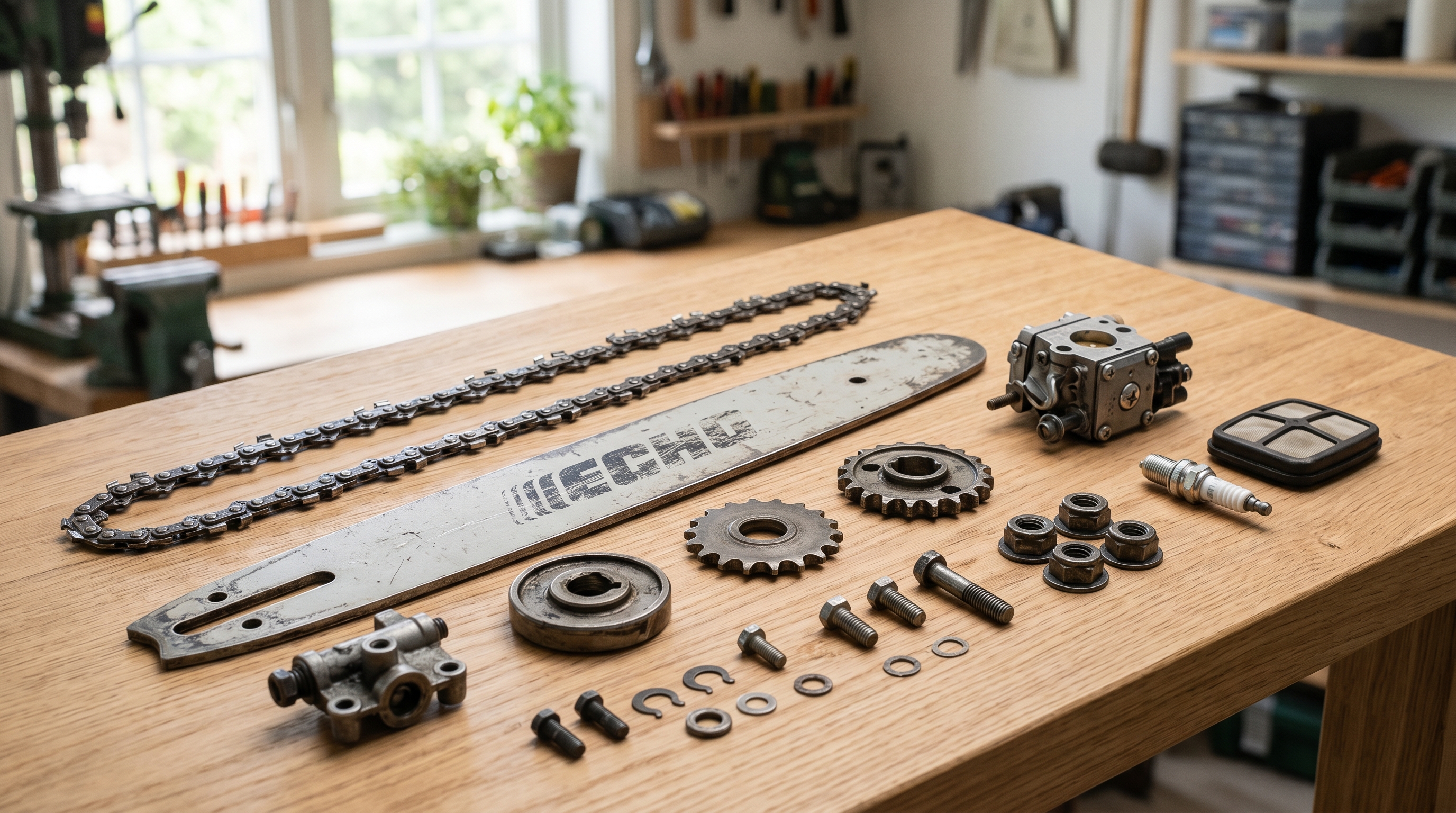
Echo eFORCE 56V Chainsaw Parts — What Carries Over from Gas Models
Echo’s move into battery-powered outdoor equipment has been a welcome one for users who already know the brand from its gas lineup. For chainsaw owners in particular, the big question is not just how the new saws cut, but how much parts compatibility carries over from the gas models they may already own. If you are moving from an Echo gas saw to the eFORCE 56V platform, the answer is encouraging: there is more overlap than many buyers expect, especially with bars and chains. But there are also a few important differences that matter when ordering replacement parts.
The current headliners in Echo’s battery chainsaw range are the DCS-5000 rear-handle saw and the DCS-2500T top-handle arborist saw. These are not toy cordless saws built around proprietary cutting systems. Echo designed them much more like professional chainsaws, and that shows in the hardware choices. For users accustomed to Echo gas models, that is good news because it means many of the wear parts follow familiar standards rather than locking buyers into one-off battery-only components.
One of the best things Echo did with the eFORCE 56V chainsaws was to keep a standard Oregon-compatible bar mount across both gas and battery lines. That decision matters a lot in the aftermarket. Instead of needing an oddball guide bar available only through a limited OEM catalog, owners of the DCS-5000 and DCS-2500T can generally shop the same style of replacement bars used on comparable Echo gas saws. For a site that sells aftermarket bars, chains, and sprockets, this is exactly the kind of compatibility buyers want to hear.
The same pattern carries over to chain specs. Echo did not reinvent chain sizing for battery tools. The eFORCE models use the same familiar pitch and gauge options seen on gas units, notably 3/8” low-profile .050” gauge and 3/8” Picco/mini-profile .043” gauge, depending on the bar and setup. That means a customer who has been running an Echo gas saw with one of those common chain formats will often find that replacement chain options look very familiar when shopping for a DCS-5000 or DCS-2500T.
This is especially helpful for buyers who already understand chain selection in practical terms: match the pitch, match the gauge, and then confirm the drive link count. From a stocking standpoint, it means many of the same chain loops that serve Echo gas customers can also serve Echo battery users. In other words, chains are largely cross-compatible between the gas and eFORCE families when the underlying specs line up.
However, this is also where one of the most important cautions comes in. Even when a gas model and a battery model use the same bar length, the drive link count may not be identical. That catches many buyers off guard. People often assume that a 14-inch bar always takes the same chain, or that all 16-inch Echo setups use one standard loop. In reality, the exact drive link count depends on the combination of bar mount pattern, bar design, nose geometry, and saw layout. A battery model can use a slightly different chain loop than a gas model with the same nominal length.
That is why the smartest rule for parts buyers is simple: verify by drive link count, not just bar length. If you are upgrading from an Echo gas saw to a DCS-5000 or DCS-2500T, do not order a replacement chain based only on “it’s a 14-inch Echo” or “my old 16-inch gas saw used this loop.” Check the stamped bar information or the saw’s published specifications and confirm pitch, gauge, and exact drive link count before buying. It is a small step that prevents a lot of returns and frustration.
Guide bar compatibility is also strong overall. In many cases, Echo gas chainsaw bars in 14-inch and 16-inch sizes will fit the eFORCE saws, provided the mount pattern and gauge match. That makes the transition to battery easier for users who may already have spare bars on hand. If your existing Echo bar uses the same Oregon-style mount and matches the chain gauge required by the battery saw, there is a good chance it will work. That said, “most” is not “all,” and buyers still need to verify the full setup rather than assuming every Echo-branded bar will swap over automatically.
The biggest difference between the gas and battery platforms shows up in the drive system, particularly the sprocket arrangement. On Echo gas chainsaws, the sprocket is typically part of a clutch drum assembly. Replacement often means servicing the rim sprocket or spur sprocket attached to that clutch-driven setup. On the eFORCE 56V battery models, there is no traditional gas-style clutch drum. These saws use a direct-drive system, so sprocket replacement works differently.
That distinction is crucial because it means sprockets are not interchangeable between Echo gas and Echo battery saws. A buyer who is used to ordering a clutch-drum-mounted sprocket for a gas model cannot assume the same part, or even the same replacement approach, applies to the DCS-5000 or DCS-2500T. For aftermarket parts shoppers, the practical message is clear: bars and chains may cross over nicely, but sprockets belong in a separate category. Always shop battery-model sprocket parts by the exact eFORCE model number, not by what fit your gas saw.
So what does all of this mean in real-world terms for someone moving from Echo gas to eFORCE battery? First, the transition is easier than expected. Chain compatibility is generally the strongest area of overlap, since Echo stayed with standard pitch and gauge formats. Second, bar compatibility is also very good, especially in common 14-inch and 16-inch sizes, as long as mount and gauge match. Third, sprocket compatibility does not carry over, because the battery saws use a different drive architecture.
For parts buyers, that is actually a practical and manageable situation. You can often reuse the same chain standards you already know. You can frequently fit the same style of guide bars used on Echo gas saws. But when it comes to drive components, you need to treat the battery platform as its own system.
Echo made a smart move with the eFORCE 56V chainsaw line by preserving common cutting-attachment standards instead of forcing users into proprietary consumables. For owners of the DCS-5000 and DCS-2500T, that means access to a wider aftermarket and easier sourcing of replacement bars and chains. Just remember the one rule that matters most: always confirm by pitch, gauge, mount, and especially drive link count—not by bar length alone. If you do that, migrating from Echo gas to eFORCE battery can be straightforward, economical, and surprisingly seamless.
Find the right part on Amazon
Check price, stock and fitment — ships direct from Amazon.
Parts


