Journal · Jun 2, 2026
Milwaukee M18 FUEL 16-Inch Chainsaw — Bar and Chain Specs You Need to Know
The Milwaukee 2727-21HD uses Oregon-compatible bars and chains. Here are the exact specs, aftermarket options, and what to watch out for.
Published
Milwaukee M18 FUEL 16-Inch Chainsaw — Bar and Chain Specs You Need to Know
If you own a Milwaukee M18 FUEL 16-inch chainsaw, or you’re thinking about replacing the stock cutting setup, the good news is simple: this saw is much easier to service with aftermarket parts than many buyers expect.
The two most common versions are the Milwaukee 2727-21HD, which is the kit version, and the Milwaukee 2727-20, which is the bare tool. Functionally, when it comes to bar and chain fitment, they are the same saw. The difference is packaging: the 2727-21HD typically includes the battery and charger, while the 2727-20 is sold without them. Both use the same 16-inch bar, the same chain dimensions, and the same mounting pattern.
For homeowners moving from gas saws to cordless, understanding these specs matters. Battery chainsaws are convenient, quiet, and low-maintenance, but they still depend heavily on having the correct guide bar and chain. A poor match can hurt cutting performance, increase battery drain, and add unnecessary wear. A proper aftermarket replacement can keep the saw cutting efficiently without forcing you into expensive proprietary parts.
Stock chain specs for the Milwaukee 2727 platform
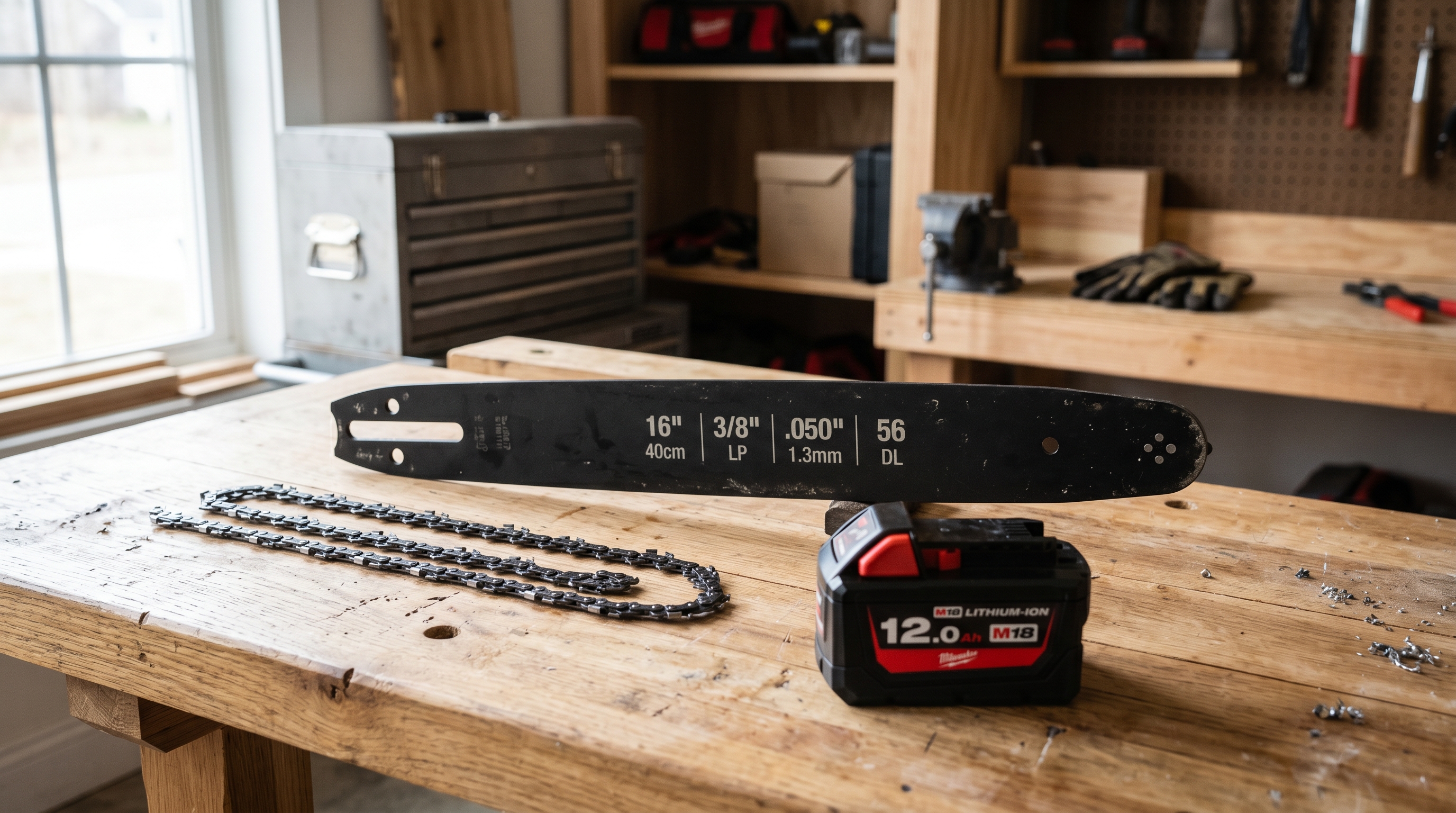
The factory chain specification for the Milwaukee M18 FUEL 16-inch chainsaw is:
- Pitch: 3/8-inch low profile
- Gauge: .043-inch
- Drive links: 56 DL
That combination is important. A lot of homeowners know only the bar length, but 16 inches alone is not enough to buy the right replacement chain. Two 16-inch chains can be completely different if the pitch, gauge, or drive link count do not match.
For the 2727-21HD and 2727-20, the replacement chain must match all three of those key dimensions:
- 3/8” LP pitch
- .043” gauge
- 56 drive links
If a chain does not match those specs, it is not the correct fit for the stock Milwaukee setup.
The bar mount is Oregon-compatible
One of the best things about the Milwaukee M18 FUEL 16-inch chainsaw is that it does not lock users into an unusual proprietary mounting system. The saw uses an Oregon-compatible bar mount, which opens the door to a wide range of aftermarket guide bars.
That is a major advantage. Some chainsaw brands rely on more brand-specific bar patterns, which can limit choices and drive up replacement costs. Milwaukee took a more practical route here. Because the 2727 platform uses an Oregon-style mount rather than something proprietary like certain Stihl-specific systems, replacement bars are much easier to source.
For buyers shopping aftermarket, that means you are not limited to factory-only bar options.
Why this is good news for aftermarket guide bars
Because the Milwaukee 2727 bar mount is Oregon-compatible, most Oregon-compatible 16-inch bars with a .043-inch gauge slot are viable replacements, provided the mount pattern and tensioner layout are correct for the saw.
That matters for two reasons.
First, it gives homeowners more flexibility in pricing and availability. If your original bar is damaged, you do not have to stop working while waiting for an exact Milwaukee-branded replacement.
Second, it allows users to choose from a broader range of bar designs. Some aftermarket bars are optimized for lighter weight, others for durability, and others for cleaner tracking with narrow-kerf battery saw chains.
In practical terms, the Milwaukee M18 FUEL platform is friendlier to replacement parts than many cordless saw owners realize.
Chain options: what works
On the chain side, compatibility is also straightforward. Any chain built to 3/8” low profile pitch, .043” gauge, and 56 drive links should fit the standard 16-inch setup on the Milwaukee 2727-21HD and 2727-20.
That gives users a useful amount of freedom when choosing cutting performance.
The main performance decision usually comes down to full chisel vs. semi-chisel cutter style.
- Full chisel chains have square-cornered cutters that are more aggressive and can cut faster in clean wood.
- Semi-chisel chains have rounded cutter corners that are slightly less aggressive but generally more forgiving in real-world conditions.
Both can fit if the chain dimensions are correct. But fitment and best performance are not always the same thing.
Why semi-chisel is usually the better choice for battery chainsaws
For most homeowners using a battery-powered chainsaw, semi-chisel is usually the smarter choice.
Why? Because cordless saws, even powerful ones like the Milwaukee M18 FUEL, still benefit from a chain that runs smoothly and does not demand quite as much from the motor and battery.
A semi-chisel chain tends to offer:
- Lower power draw
- Smoother cutting behavior
- Better edge retention in dirty or mixed conditions
- Less sensitivity to slight contact with debris, bark contamination, or dulling
That makes it especially well-suited to battery saws used for storm cleanup, backyard pruning, firewood limbing, and general homeowner cutting.
A full chisel chain can be a good choice if you are cutting consistently clean wood and want maximum aggression. But it typically dulls faster and can place a heavier load on the saw. On a gas saw with abundant torque and easy refueling, that tradeoff may be worthwhile. On a cordless saw, many users prefer the more balanced behavior of semi-chisel.
For homeowners upgrading from gas to battery, this is one of the biggest mindset shifts: the fastest chain on paper is not always the most efficient chain in practice.
When it’s time to replace the bar
Chains get most of the attention, but guide bars wear too. If your Milwaukee chainsaw is no longer cutting straight, or if chain performance drops even with a sharp chain, the bar may be the problem.
Common signs that a bar needs replacement include:
-
Pinched or spread rails
If the groove is deformed, the chain may rock, bind, or track poorly. -
A worn nose sprocket
If the sprocket at the tip is rough, seized, or excessively loose, cutting efficiency suffers and chain wear increases. -
A bent bar
A bent bar will often cause curved cuts, uneven chain wear, and unstable handling.
Also watch for heavy rail wear, burr formation, or visible discoloration from overheating. These are all clues that the bar may be past its useful life.
Milwaukee’s dual-stud bar tensioning system
One detail buyers should pay attention to is Milwaukee’s dual-stud bar tensioning system. This setup affects bar compatibility because the replacement bar must work properly with the saw’s stud spacing and tensioner arrangement.
In other words, even though the saw uses an Oregon-compatible mount, not every 16-inch bar on the market is automatically interchangeable. You still need a bar designed for the correct mount pattern and tensioning geometry.
That is why fitment should always be verified by:
- Saw model
- Bar mount pattern
- Gauge
- Bar length
- Chain specs
The bottom line
The Milwaukee M18 FUEL 16-inch chainsaw, whether you own the 2727-21HD kit or the 2727-20 bare tool, uses a very workable cutting setup for aftermarket replacement parts.
The stock chain spec is:
- 3/8” low profile
- .043” gauge
- 56 drive links
The saw uses an Oregon-compatible bar mount, which is excellent news for buyers looking for replacement guide bars without being locked into a proprietary system. Most compatible 16-inch Oregon-style bars with a .043 slot can be strong aftermarket options, and any chain matching 3/8” LP, .043, 56 DL will fit the standard setup.
For most battery chainsaw users, a semi-chisel chain is usually the best all-around choice thanks to smoother cutting and lower power demand. And if your saw is wandering, binding, or wearing chains unevenly, don’t forget to inspect the guide bar itself.
For homeowners switching from gas to cordless, the Milwaukee 2727 platform offers a reassuring advantage: replacement bars and chains are not complicated, as long as you know the specs.
Find the right part on Amazon
Check price, stock and fitment — ships direct from Amazon.
Parts


