Journal · Jun 2, 2026
Spring Tree Pruning — Choosing the Right Bar Length and Chain for the Job
How to pick the right bar length and chain type for spring pruning of fruit trees, ornamentals, and deadwood removal.
Published
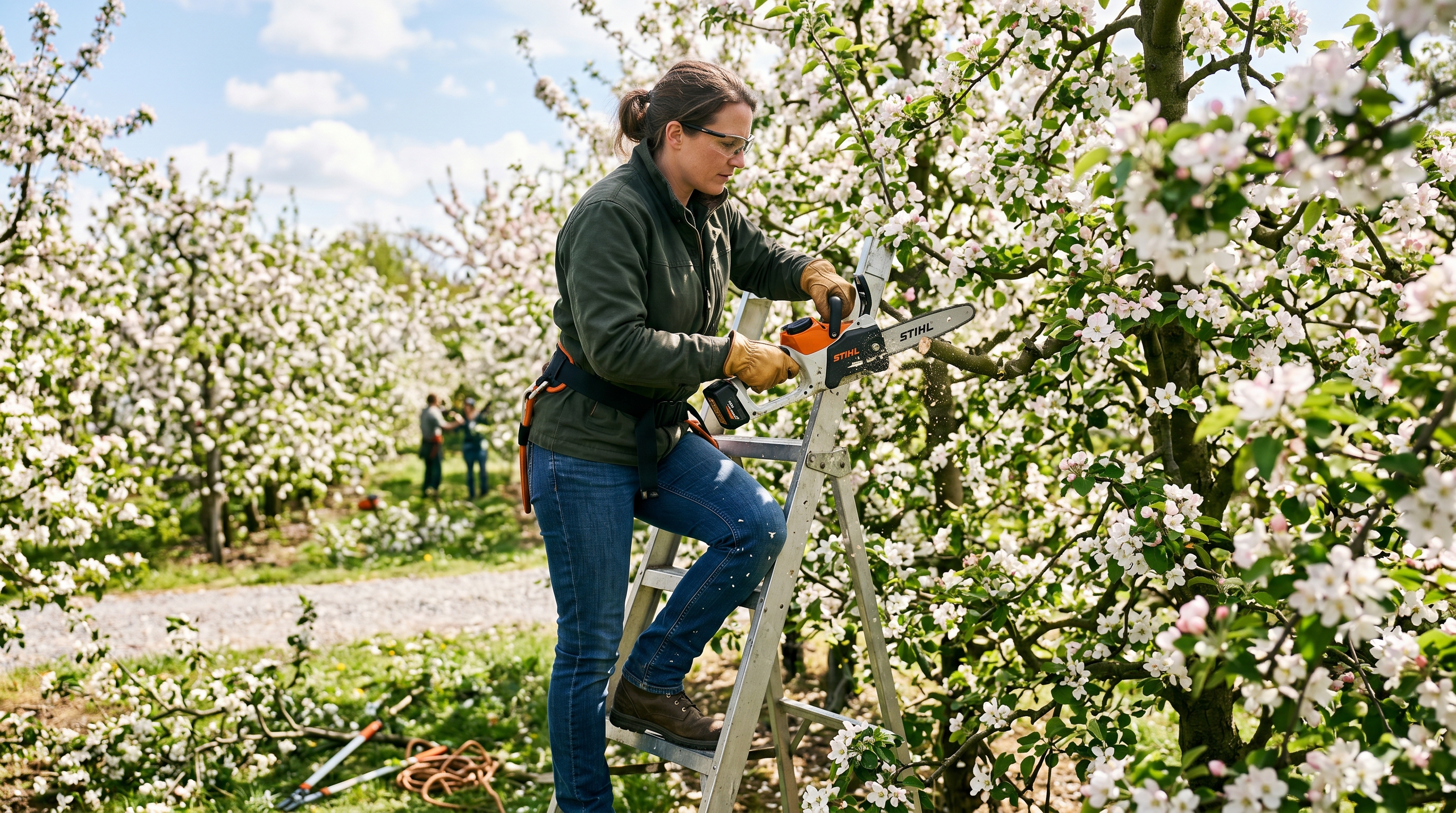
Spring pruning is a different kind of chainsaw work. You are not felling timber or bucking firewood. You are making precise cuts on living trees — often overhead, sometimes at arm’s length, frequently on branches no thicker than your forearm. A 20-inch bar with an aggressive full-chisel chain is overkill for removing deadwood from an apple tree, and it introduces unnecessary risk in the tight positions that pruning demands.
Matching your bar length and chain profile to the actual work makes pruning faster, safer, and less tiring.
Why shorter bars win for pruning
Most spring pruning involves branches in the 2-to-8-inch diameter range. Fruit trees, ornamentals, and residential shade trees rarely require more than a 14-inch bar. A shorter bar gives you several advantages:
Better control. A 10-to-14-inch bar is lighter and easier to maneuver in the canopy. You can position the saw precisely without fighting bar weight or catching the tip on adjacent branches. This matters most on overhead cuts where leverage is limited.
Reduced kickback zone. The upper quadrant of the bar tip is the kickback danger zone. A shorter bar has a smaller tip radius, reducing kickback force if the nose contacts a branch unexpectedly.
Less fatigue. Pruning sessions can stretch for hours. A compact saw with a short bar puts less strain on your arms and shoulders over a full day of work.
For most homeowner pruning, a 10-inch or 12-inch bar handles the job. For deadwood limbs in the 6-to-10-inch range, a 14-inch bar gives additional reach without sacrificing much control. Going longer than 14 inches for pruning is rarely necessary.
If you need to verify the right bar length for your saw, our guide on how to measure a chainsaw guide bar covers the process.
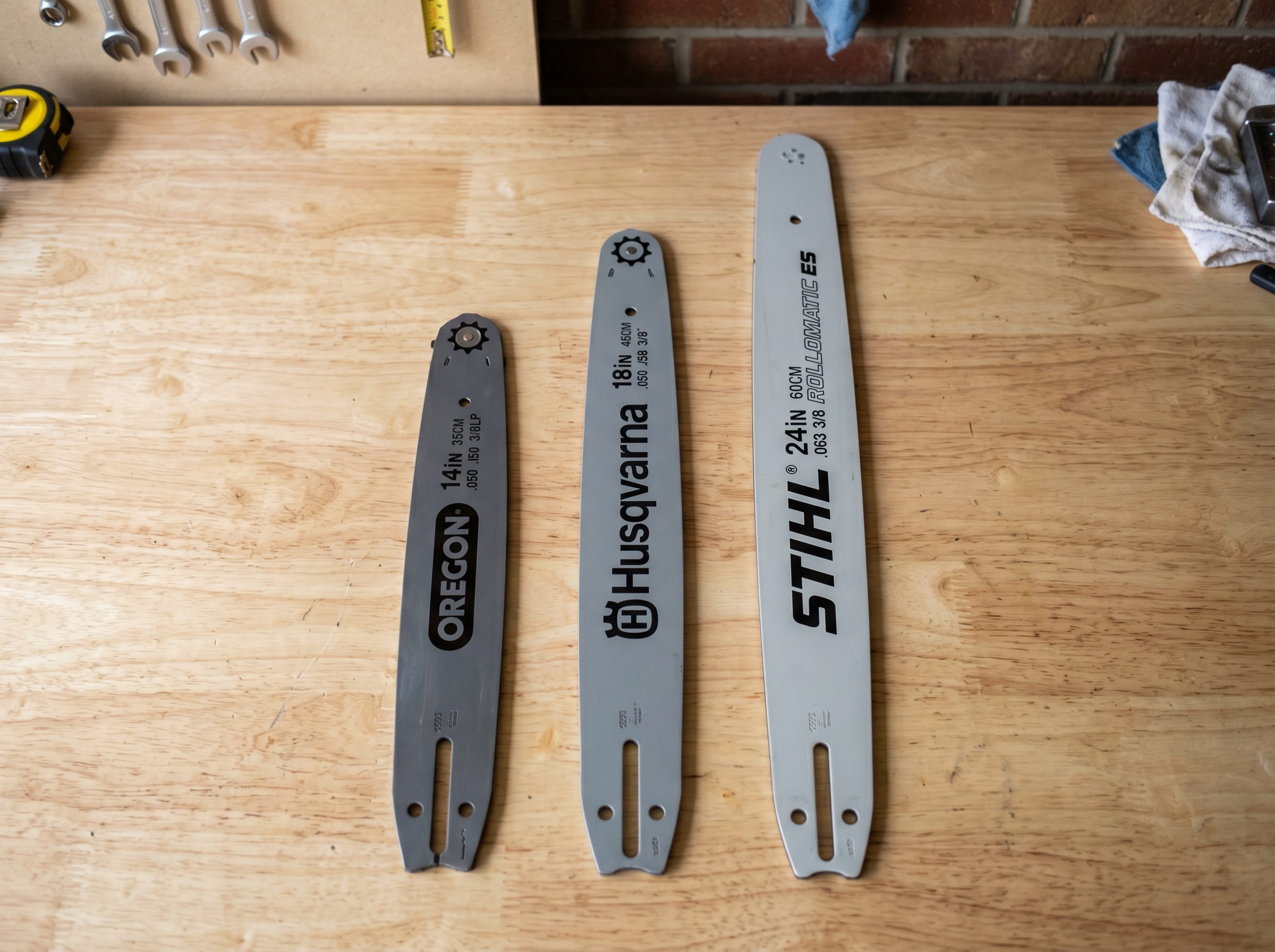
Low-kickback chain is the right call
Chain selection for pruning should prioritize safety over raw cutting speed. You are making clean cuts on small branches, often in positions where recovering from a kickback event would be difficult.
Run a low-kickback chain. These chains feature guard links or modified cutter geometry that reduces the aggressiveness of the kickback zone. They cut slightly slower than standard chains, but the speed difference is negligible on small-diameter pruning wood. What you get is a significantly reduced chance of the saw jumping back at you during overhead or awkward-angle cuts.
Semi-chisel profile is preferred. Semi-chisel cutters hold their edge well through the mix of green wood, dry deadwood, and bark you encounter across a pruning session. The rounded cutter corner is also more forgiving if you graze bark or contact a branch stub at a shallow angle. If you primarily prune clean fruit trees and want the fastest cut, full chisel is an option, but most pruners get better results from semi-chisel for the reduced maintenance.
Match the setup to your saw
If your current saw runs a longer bar for firewood work and you want a shorter bar for pruning, you need to match several specs:
- Bar mount pattern. The bar must fit your saw’s stud spacing, tensioner slot, and oil delivery hole.
- Pitch. The chain pitch must match both the bar and the drive sprocket. Common pitches for small bars are 3/8-inch low-profile and .325-inch.
- Gauge. The chain gauge must match the bar groove width. Most small bars run .043-inch or .050-inch gauge.
- Drive link count. This is determined by bar length and mount design. Two 12-inch bars from different manufacturers can require different DL counts.
Do not assume a shorter bar from the same brand will automatically fit. Different bar lengths can have different mount patterns or require different chain specs. Our bar and chain combo matching guide covers how to verify compatibility for your specific saw.
Pruning technique tips
Use the three-cut method on larger limbs. For branches thicker than about 3 inches, make an undercut first (cutting upward about one-third through), then a top cut slightly farther from the trunk to remove the weight, and finally a clean cut at the branch collar. This prevents bark tearing and trunk damage.
Avoid cutting with the tip. Even with low-kickback chain, keep the bar tip clear of adjacent branches. Use the bottom of the bar for pull cuts or the top for push cuts.
Do not cut above your head at full arm extension. If you cannot reach a branch safely from the ground or a stable ladder, the job calls for a pole saw, not a chainsaw held overhead.
Keep the chain sharp throughout the session. Green wood cuts cleanly with a sharp chain but tears with a dull one. Pruning cuts on living trees should be smooth to promote healing. Touch up the chain with a file when cuts start looking rough.
Spring pruning bar and chain summary
| Pruning task | Recommended bar length | Recommended chain |
|---|---|---|
| Fruit trees, small ornamentals | 10-12 inches | Low-kickback, semi-chisel |
| Deadwood removal, medium limbs | 12-14 inches | Low-kickback, semi-chisel |
| Larger shade tree limbs (6-10 in.) | 14 inches | Low-kickback, semi-chisel or full chisel |
The right setup for spring pruning is simple: short bar, low-kickback chain, semi-chisel profile. Save the long bar and aggressive chain for firewood season, and give yourself the control that pruning work demands.
Find the right part on Amazon
Check price, stock and fitment — ships direct from Amazon.
Parts


