Journal · Jun 2, 2026
Firewood Season Bar and Chain Prep — Get Ready for Fall Cutting
How to inspect and prepare your chainsaw bar, chain, and sprocket before firewood season starts so you cut efficiently all fall and winter.
Published
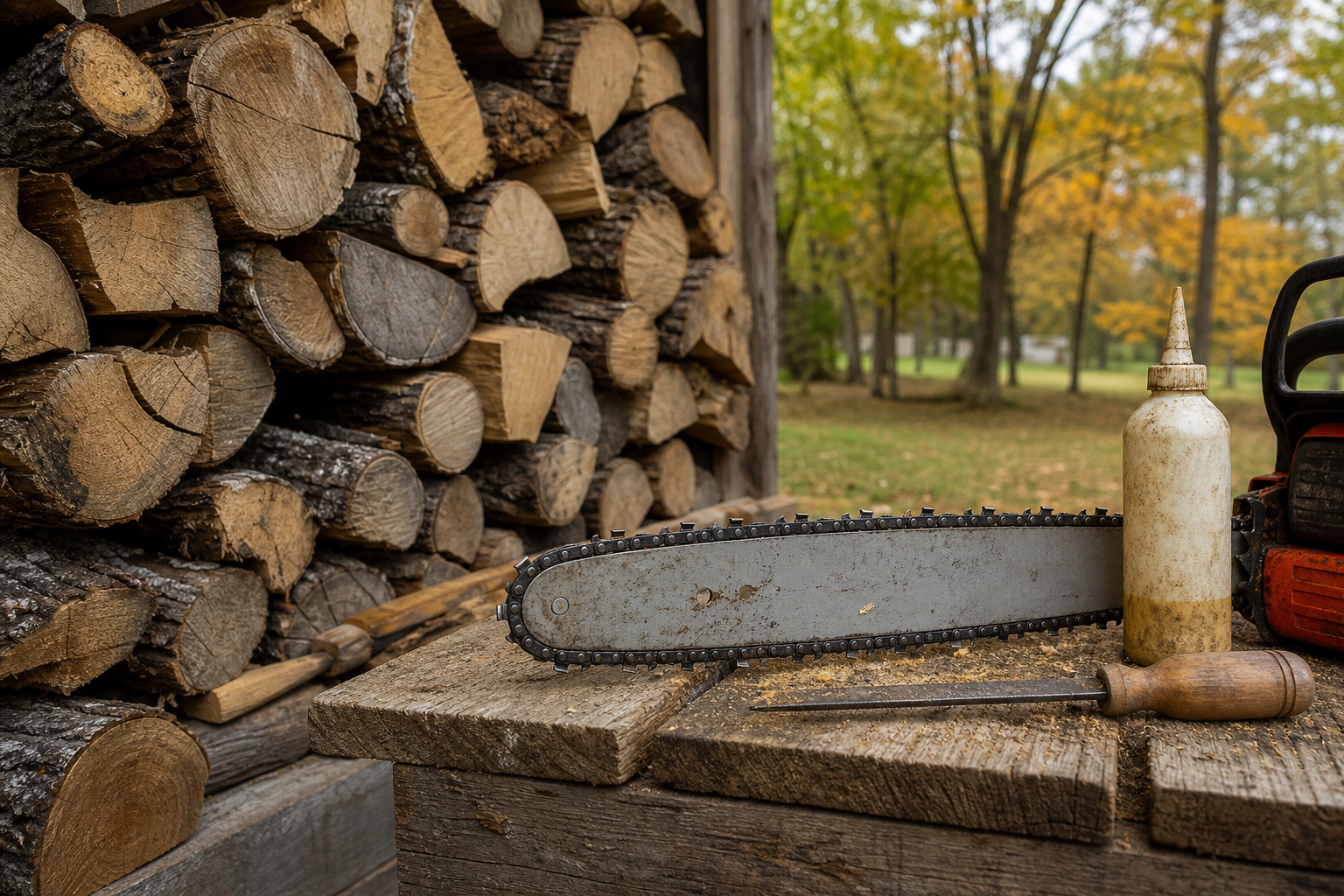
Firewood season puts more hours on a chainsaw than any other homeowner task. Between felling, bucking, and limbing, a weekend of firewood work can log as many cuts as six months of occasional yard maintenance. That kind of sustained cutting exposes every weakness in your bar, chain, and drive system. A dull chain or worn bar that felt “good enough” for trimming deadwood will slow you down and wear out your saw once the real work starts.
Late summer is the time to prep. Getting your cutting system dialed in before the first cool weekend means you spend the fall putting up wood instead of troubleshooting mid-job.
Start with the chain
Pull the chain off the bar and give it a thorough inspection.
Check sharpness. A sharp chain pulls itself into the wood and throws thick chips. A dull chain makes fine dust, requires you to push down hard, and heats up the bar. If the cutters have flat or rounded edges, they need attention. Our step-by-step guide on how to sharpen a chainsaw chain covers file size, angles, and depth gauge settings.
When to replace instead of sharpen. If the cutters have been filed back until they are noticeably short, or if cutter lengths are uneven from inconsistent filing, the chain is past its useful life. Short cutters reduce cutting depth per pass. Uneven cutters pull the saw to one side. At that point, a new loop is cheaper than fighting the old one.
Also replace if you see cracked links, damaged tie straps, or excessive stretch. A chain that requires the tensioner near its maximum adjustment has stretched beyond safe use.
Inspect the bar
The bar wears slowly, so it is easy to overlook — but a worn bar sabotages everything else.
Check the bar rails. Flip the bar over and hold it at eye level. The two rails should be even in height. If one side is lower, the chain leans in the cut, causing crooked cuts and accelerated chain wear. Minor unevenness can be filed flat, but significant wear means the bar needs replacement.
Check for rail spread. Over time, the rails can spread apart at the nose, widening the groove. A groove that is too wide lets the chain wobble laterally, reducing cutting precision and risking derailment.
Clean the groove and oil holes. Compacted sawdust in the groove acts like sandpaper against the drive links. Use a groove-cleaning tool to scrape out the full length, and make sure the oil delivery holes are clear. Restricted oil flow is one of the fastest ways to kill a bar.
Check the nose sprocket. Spin it by hand. It should rotate smoothly with minimal play. A seized nose sprocket creates friction and heat at the exact point where the chain changes direction at high speed.
For a complete walkthrough, see our guide on bar rail wear diagnosis.
Check the drive sprocket
The drive sprocket is the most neglected wear part on a chainsaw. It meshes with every drive link on every revolution, wearing in a predictable pattern: teeth develop grooves, hooks, or flattened profiles that no longer mesh cleanly with the chain.
Replace the sprocket every two chains. If you are starting firewood season with a new chain, count back. If the sprocket has already run two or more chains, replace it now. A worn sprocket accelerates chain stretch and causes uneven drive-link wear.
Signs of a worn sprocket include visible grooves between the teeth, hooked tooth profiles, chain that stretches faster than expected, and chain that derails despite proper tension. Our guide on worn sprocket signs and replacement has detailed photos and steps for both rim and spur systems.
Match your chain to the wood
If you are cutting mostly clean, dry hardwood, a full-chisel chain gives the fastest cuts. Full chisel excels in clean wood where speed matters and you touch up the edge frequently.
If your firewood source includes dirty logs or salvage wood that has been sitting on the ground, a semi-chisel chain holds its edge significantly longer. Many firewood cutters keep one loop of each profile so they can swap based on conditions.
Either way, make sure your chain matches the bar and sprocket specs — same pitch, same gauge, correct drive-link count. If you are not sure which specs to match, our bar and chain combo matching guide breaks it down by saw model.
Pre-season checklist
Run through this before the first cutting weekend:
- Chain: Sharp, no cracked or damaged links, even cutter lengths.
- Bar: Rails even, groove clean, oil holes clear, nose sprocket spinning freely.
- Sprocket: No visible grooves or hooks, replaced if two or more chains have been run.
- Tension: Chain snug against the bar with enough give to pull slightly away from the rail by hand.
- Oil system: Bar oil reservoir full, delivery to the chain confirmed.
- Air filter: Clean and free of debris.
- Fuel: Fresh fuel mix at the correct ratio — drain anything left over from last season.
A firewood saw that is dialed in before the season starts will cut faster, stay sharper longer, and put less strain on you and the machine. The half hour you spend on prep pays back many times over across a full season of cutting.
Find the right part on Amazon
Check price, stock and fitment — ships direct from Amazon.
Parts


