Journal · Jun 2, 2026
Storm Cleanup Chainsaw Checklist — What to Inspect Before Cutting Downed Trees
A pre-cut inspection checklist for your chainsaw bar, chain, and safety gear before tackling storm-downed trees.
Published
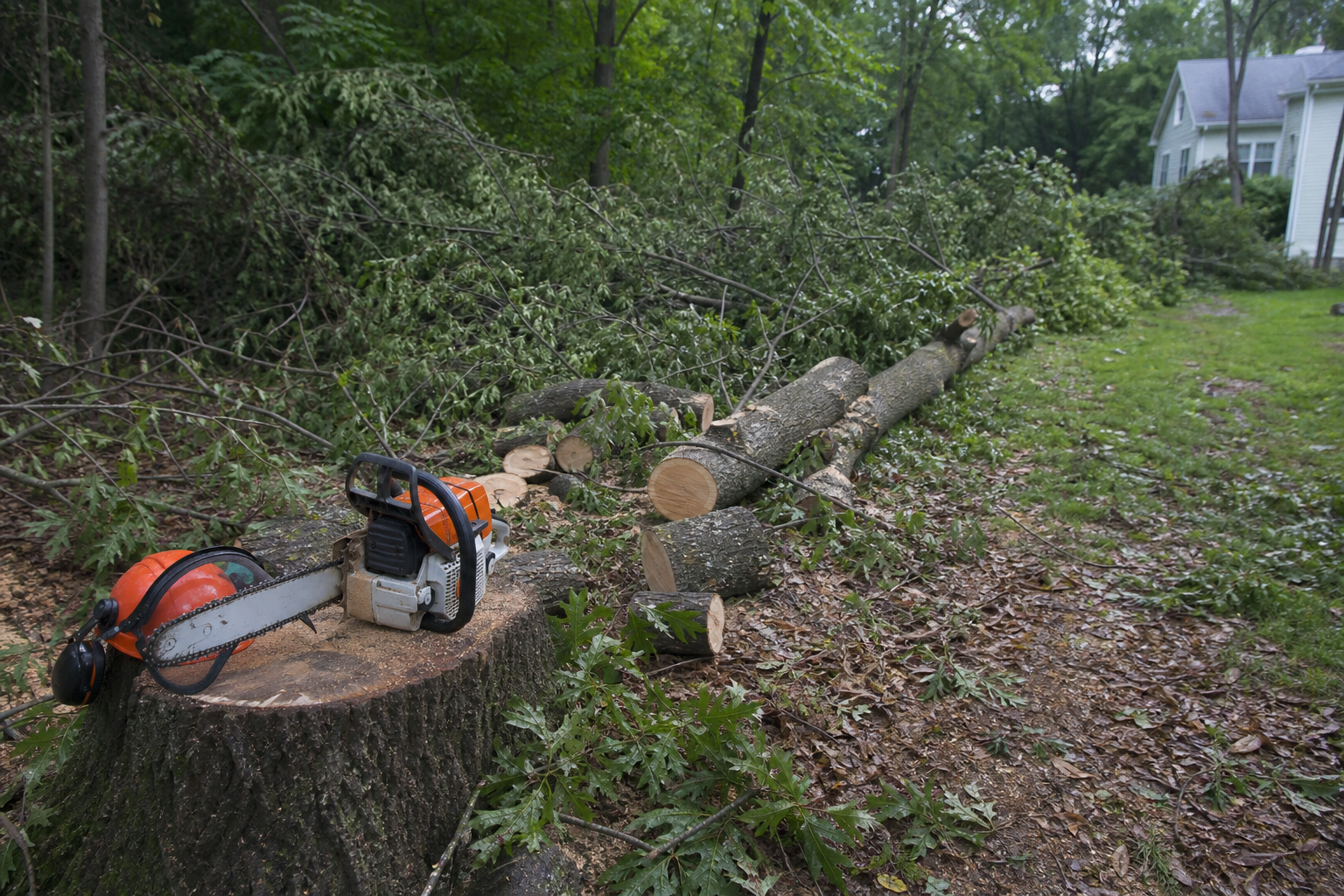
After a major storm, the pressure to start cutting is immediate. Trees are blocking driveways, leaning on fences, and every neighbor with a chainsaw is already outside. That urgency is exactly why storm cleanup causes more chainsaw injuries than almost any other cutting scenario. Before you pull the starter cord, take fifteen minutes to inspect your saw and plan your cuts.
Safety before sawdust
Stay away from downed power lines. Assume every wire is live until the utility company confirms otherwise. If a tree is touching or near a wire, that is a professional job.
Downed trees under tension are unpredictable. A trunk resting on a branch can spring violently when cut. Before making any cut, figure out where the tension is and which direction it will release. If you are not sure, leave it for someone with experience.
Wear full PPE every time — chaps, steel-toe boots, hearing protection, eye protection, gloves, and a helmet. Storm cleanup is not the time to skip gear because “it’s just one quick cut.”
Inspect the chain
Your chain might have been sitting in the shed since last fall. Pull it off the bar and look closely:
- Check for damaged or missing cutters. Cracked or broken teeth vibrate excessively and cut unevenly.
- Check sharpness. Dull cutters or uneven lengths from past filings mean the chain needs sharpening or replacement before you head out.
- Check tension. A loose chain can derail mid-cut. A chain that is too tight wears out the bar and sprocket prematurely. Adjust tension with the bar nose lifted slightly.
If the chain shows heavy surface rust from sitting unused, replace it — corrosion weakens the links. If you need to swap in a fresh loop, our guide on how to install a new chainsaw chain walks through the process.
Run semi-chisel for dirty wood
Storm-downed trees are almost always dirty. Bark picks up mud, sand, and gravel as the tree falls and skids across the ground. That grit destroys a full-chisel chain in minutes.
Run a semi-chisel chain for storm cleanup. The rounded cutter profile holds its edge far longer in dirty conditions. You give up a little speed but gain hours of usable edge life. For a deeper comparison, see our breakdown of full chisel vs. semi-chisel chain.
Watch for hidden metal in downed trees. Fences, wire, nails, and old hardware get swallowed by tree growth over the years. A fallen tree that took out a fence almost certainly has wire or T-posts tangled in the trunk. One hit on a nail destroys a chain instantly. Scan the wood visually before each cut, and if you see metal, cut well away from it.
Inspect the bar
Pull the chain off and check the bar:
- Bar rails. Run a straightedge across the top of the rails. If they are uneven, cupped, or have burrs, the chain will not track properly. Light burrs can be filed off, but uneven rail wear means the bar needs replacement.
- Bar groove. Storm debris packs into the groove and oil holes. Use a groove-cleaning tool to clear compacted sawdust and grit. A clogged groove prevents proper oiling and accelerates wear.
- Nose sprocket. Spin it by hand. It should rotate freely and smoothly. A seized nose sprocket generates friction and heat, which can stretch or break the chain mid-cut.
If your bar shows signs of wear, our guide on bar rail wear diagnosis covers what to look for.
Check the sprocket and chain brake
The drive sprocket wears over time, and a worn one will chew through a new chain fast. Look for visible grooves, hooked teeth, or uneven wear. If you have run two or more chains on the same sprocket, it is time for a new one.
Test the chain brake before every session. Pull the front hand guard forward — the chain should stop immediately. If it feels sluggish, do not use the saw until it is fixed. Kickback risk is elevated during storm work because of awkward cutting angles and unpredictable wood.
If your chain keeps coming off during storm work, the problem is usually bar wear, incorrect tension, or a worn sprocket. Our troubleshooting guide on why your chainsaw chain keeps coming off covers the most common causes.
Pre-cut checklist
Run through this before making the first cut on any storm job:
- Area cleared of electrical hazards and bystanders.
- Tension loads on the tree identified and a cut plan made.
- Full PPE on — chaps, helmet, eye and ear protection, gloves, boots.
- Chain inspected, sharp, properly tensioned, in good condition.
- Semi-chisel chain mounted for dirty wood.
- Bar rails checked, groove cleaned, nose sprocket spinning freely.
- Drive sprocket inspected for wear.
- Chain brake tested and engaging properly.
- Bar oil reservoir full, fuel mix fresh.
- A clear escape path identified before each cut.
Taking a few minutes to inspect your equipment is not wasted time — it is the difference between getting the job done safely and creating a bigger problem than the one the storm left behind.
Find the right part on Amazon
Check price, stock and fitment — ships direct from Amazon.
Parts


